

OUR INSIGHTS

Elite athletes have a leadership trait that boardrooms underestimate
May 29, 2026
When people think about elite athletes transitioning into business, they tend to spotlight the obvious: discipline, competitiveness, teamwork. And yes—those qualities matter. But after years of working alongside elite athletes every day with the Atlanta Braves organization, I can tell you the most underestimated leadership trait they bring into the boardroom is something far more powerful:
Adaptability under pressure
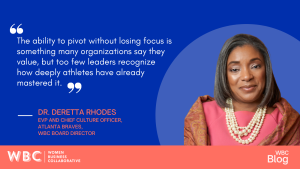
Great athletes are constantly adjusting in real time. They make decisions with incomplete information. They recover quickly from failure. They recalibrate strategy, and they continue performing while the world is watching. That ability to pivot without losing focus is something many organizations say they value, but too few leaders recognize how deeply athletes have already mastered it.
Participating in sports teaches people how to respond, not just react. It builds emotional resilience, situational awareness, accountability, and the ability to lead through uncertainty. Those aren’t “nice-to-have” traits, those are executive competencies.
Working in professional sports has given me a front-row seat to behaviors that translate directly into leadership. The athletes who stand out are not always the loudest voices in the room. Often, they are the ones who elevate everyone around them. They understand preparation. They understand consistency. They understand culture; and they know how to handle pressure without making it contagious to the team.
That is executive material.
I’ve seen moments in clubhouses where athletes instinctively manage morale, navigate conflict, or refocus a team after a difficult loss—moments that mirror what exceptional executives do inside organizations. The best leaders in sports understand that performance is never just individual; it is about creating environments where others can succeed too.
We see this leadership thread show up again and again in women CEOs who competed as athletes earlier in life. Whether it’s resilience, strategic thinking, or comfort with risk and accountability, sports create leadership muscles that continue showing up long after on-the-field competition ends.
And yet, despite all of this, the pathway from elite sport into business leadership is still far more established for men than for women. Too often, women athletes leave competition without the networks, sponsorship, mentorship, or financial runway that help translate their leadership skills into corporate advancement.
The talent is there. The infrastructure around that talent is what remains underdeveloped.
That is why the Athlete Business Academy (ABA) matters.
The founding insight behind the ABA was simple: women athletes already possess many of the leadership competencies companies claim they want, but there has been no intentional ecosystem connecting those athletes to executive pathways, mentors, corporate sponsors, and leadership development opportunities.
General career transition programs weren’t enough. They often failed to recognize the unique experiences, visibility, pressures, and strengths elite women athletes bring.
The ABA was designed to bridge that gap with intention. It combines mentorship, executive exposure, business education, networking, and leadership development—while also helping corporations better understand the value athletes bring into organizational culture and leadership pipelines.
Most importantly, the ABA recognizes that this is not about helping athletes “find jobs.” It is about helping organizations recognize extraordinary leadership talent that has too often been overlooked.
If I could speak directly to CEOs and chief people officers, I would encourage them to stop viewing athletes-in-transition as unconventional hires and start recognizing them as high-capacity leadership talent. Hire them into meaningful roles with growth potential—not symbolic opportunities.
To executives considering mentorship, I would say: open the door. Relationships and sponsorship matter. Sometimes the most transformational thing a leader can do is help someone translate their experience into a new environment and advocate for them once they are there.
And to funders and partners, I would emphasize that investing in this work is not simply supporting athletes. It is investing in leadership development, workforce innovation, women’s economic mobility, and the future of business leadership itself.
Throughout my career, I have seen former athletes thrive inside organizations because they understand accountability, preparation, teamwork, resilience, and how to perform under pressure. In many cases, they outperform expectations because they are already conditioned to grow through challenge and continuously improve.
What we can do better is create more intentional pathways earlier. We need stronger networks, more executive sponsorship, more visibility, and more organizations willing to rethink what leadership talent looks like.
The reality is this: Many of the qualities companies are searching for already exist inside women athletes. The opportunity now is for business leaders to recognize it—and build systems that allow that leadership to flourish.
Author
-

DeRetta Rhodes, Ph.D. is the Executive Vice President & Chief Culture Officer of the Atlanta Braves, overseeing people capital initiatives, communications and community affairs for the Braves, The Battery Atlanta and team’s Spring Training facility operations.
View all posts