

OUR INSIGHTS

Closing the Innovation Gap: Why Women Entrepreneurs Are Critical to the Future of Economic Growth
April 12, 2026
If the next decade is defined by how well we solve complex, system-level challenges, then innovation cannot afford blind spots. Yet today, one of the largest missed opportunities in the global economy is the innovation gap—the untapped potential of women-led ideas, startups, and patents that remain underfunded and under-supported.
This is not just a matter of fairness. It is an economic imperative.
Women’s Business Collaborative (WBC) is addressing this opportunity head on by elevating women entrepreneurs in high-growth, high-impact sectors. From climate technology to AI ethics, women are not only participating in innovation—they are solving some of the most urgent structural problems facing our economy.
The Economic Case for Closing the Gap
Recent projections show that advancing women’s full participation in innovation could add trillions to global GDP. At a time when countries are competing for leadership in emerging industries, failing to fully engage half the talent pool is not just inefficient—it’s risky.
The innovation gap exists because women-led ventures receive a fraction of venture capital funding, hold fewer patents, and face systemic barriers in scaling their ideas. This creates a bottleneck in the innovation pipeline. Fewer ideas reach the market, fewer solutions are tested, and fewer breakthroughs are realized.
Closing this gap is not optional. It is a prerequisite for maintaining national competitiveness in an increasingly innovation-driven economy.
Our focus on women entrepreneurs is designed to connect women entrepreneurs—especially women of color—with venture capital, partner organizations, plus we offer resources such as our Women’s Capital Summit and Fundamentals of Capital webinar series. The webinar series was developed in conjunction with Babson College’s Center for Women’s Entrepreneurial Leadership and Wells Fargo Bank to provide an educational resource that will expose women in academic and practical settings to capital structure, uses and types of capital, capital prioritization, and pitching for capital.
Women Leading in Climate Technology
Nowhere is the need for inclusive innovation more urgent than in climate technology. The transition to a sustainable economy requires rapid development of new systems, materials, and infrastructure. Women entrepreneurs are stepping into this space with solutions that are both scalable and community-focused.
From clean energy platforms to circular economy models, women-led ventures are addressing inefficiencies that traditional systems have overlooked. Many are designing solutions that consider not just environmental impact, but also economic accessibility and long-term resilience.
WBC has been instrumental in amplifying these voices, connecting founders with networks, capital, and policy conversations that help bring their ideas to life. By doing so, it is helping ensure that climate innovation reflects a broader range of perspectives—and ultimately produces more effective outcomes.
AI Ethics and the Future of Technology
Artificial intelligence is another area where the innovation gap carries significant consequences. As AI systems become more integrated into daily life, the question is no longer just what we can build, but what we should build.
Women entrepreneurs are playing a critical role in shaping AI that is ethical, transparent, and accountable. They are developing tools to reduce bias in algorithms, improve data governance, and ensure that AI systems serve diverse populations.
Without this perspective, the risk is clear: technology that reinforces existing inequalities rather than solving them.
WBC’s leadership in this space highlights a broader truth. Innovation is not just about speed or scale. It is about direction. Who is building the future matters just as much as what is being built.
Through key partners, WBC amplifies this direction. Mission Impact Academy is an online AI-learning platform that trains women as AI users and builds supportive communities. The National Association of Women’s Business Owners had developed an AI bot tailored for women entrepreneurs; and the woman-led online platform My Cabinet is a medical technology solution assisting elderly patients with their medication.
Structural Barriers, Structural Solutions
The challenges facing women entrepreneurs are not due to a lack of ambition or capability. They are structural. Access to capital, mentorship, networks, and visibility all play a role in determining which ideas succeed.
WBC approaches this challenge with a systems-level mindset. It is not just supporting individual entrepreneurs—it is working to reshape the ecosystem around them. This includes advocating for equitable investment practices, fostering cross-sector partnerships, and creating platforms that elevate women-led innovation.
Here our Women Entrepreneurs and Access to Capital initiative again comes into play, linking women entrepreneurs—particularly women of color—with venture capital firms, partner networks, and key resources like the Women’s Capital Summit and the Fundamentals of Capital webinar series.
This kind of leadership is essential because the innovation gap cannot be closed by isolated efforts. It requires coordinated action across business, policy, and finance.
A Competitive Advantage We Can’t Ignore
There is a tendency to frame gender equity as a social goal, separate from economic strategy. That framing is outdated.
In reality, the two are deeply connected. Economies that fail to harness the full spectrum of talent will fall behind those that do. Innovation thrives on diversity of thought, experience, and perspective. When those inputs are limited, so are the outcomes.
By championing women entrepreneurs in sectors like climate tech and AI, WBC is not just advancing equity. It is strengthening the foundation of future economic growth.
As a powerful collective, WBC amplifies this impact through initiatives like the Women’s Capital Summit, which convenes investors, leaders, and innovators to unlock funding pathways. By supporting its partners—such as Babson College and Wells Fargo—WBC scales access to mentorship, capital education, and networks, creating a multiplier effect that empowers women entrepreneurs to drive sustainable, inclusive prosperity across industries.
Looking Ahead
The next wave of innovation will determine how we address climate change, manage technological disruption, and build resilient economies. The question is whether we will approach that future with a narrow lens or a wide one.
Closing the innovation gap is one of the clearest opportunities to accelerate progress. It unlocks new ideas, expands the talent pipeline, and increases the likelihood of breakthrough solutions. WBC’s work makes one thing clear: when women entrepreneurs are fully supported, the impact goes far beyond individual success stories. It reshapes industries, strengthens economies, and creates a more competitive and sustainable future.
It is for this reason that the WBC is hosting the Women’s Capital Summit. This summit is building the ecosystem to ensure capital and investment is provided to women led business in climate, tech, manufacturing and beyond.
The path forward is not complicated, but it does require commitment. Invest in women. Remove structural barriers. Expand access to opportunity.
Because the cost of leaving innovation on the table is simply too high.
Author
-
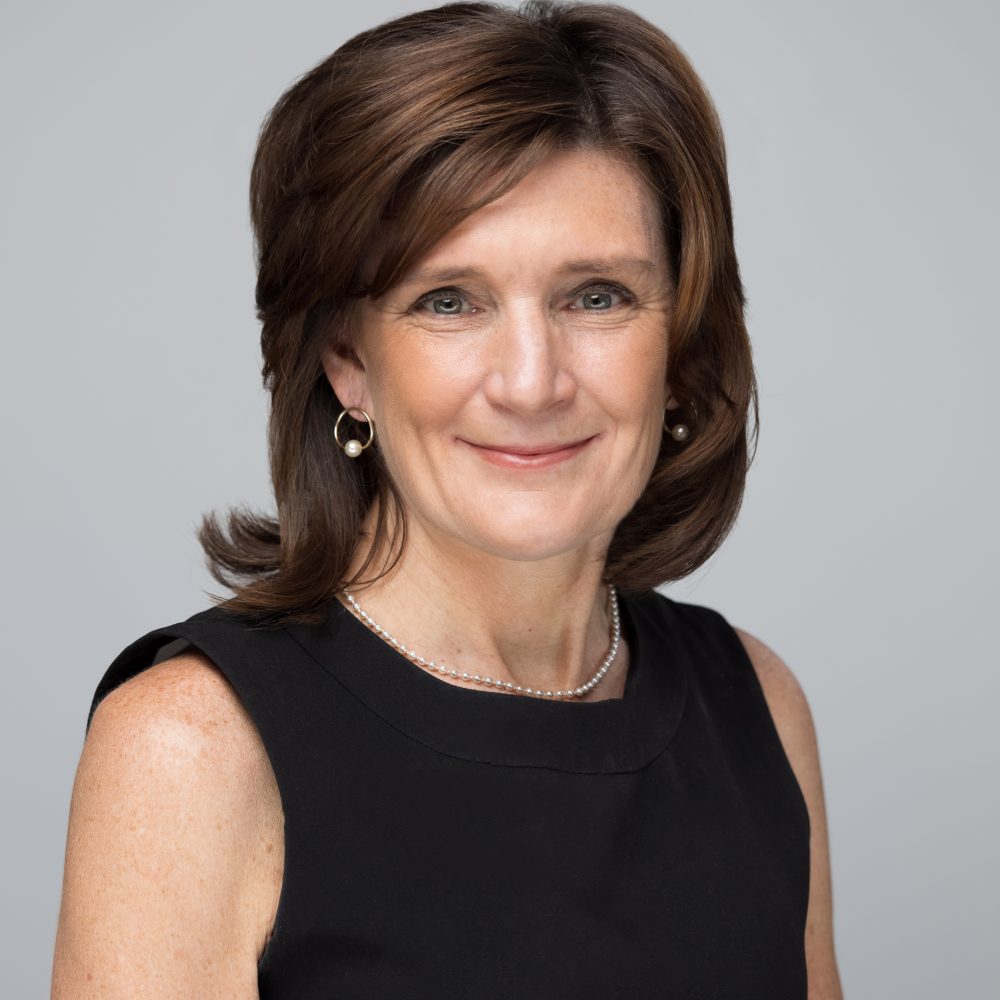
Gwen K. Young is the CEO of the Women Business Collaborative. She is also a Visiting Scholar at the Elliot School of International Affairs, George Washington University and former Director of the Global Women’s Leadership Initiative at the Wilson Center. She is an Advisor to Concordia. Ms. Young has worked across the globe to promote economic development, good governance and peace. She has developed strategy, programming and advocacy in the areas of humanitarian policy, international affairs and international development. This includes developing public private partnerships focused on public health, agriculture, gender equality, and access to finance. Further, Ms. Young has advocated for and published on international criminal law and designed SGBV guidelines. As an attorney, Ms. Young has worked as a professional advocate for women and human rights in corporate law settings, with the ICTY and the Kroc Institute for Peace and Justice at the University of San Diego. Her career has encompassed a comprehensive array of international organizations including the Bill & Melinda Gates Foundation, Medecins Sans Frontieres, International Rescue Committee, and the Harvard Institute for International Development. An alumna of Smith College, Harvard’s Kennedy School of Government and the University of California Davis, School of Law, Ms. Young has pursued a career of international public service focused on humanitarian relief, international development, and human rights starting with gender equality and equity.
View all posts