

OUR INSIGHTS

Radical Collaboration: The Workforce and Economy We Build Together
June 11, 2026
Technology is changing the way we work. Industries are evolving at unprecedented speed. Demographic shifts are reshaping our workforce. Organizations are facing new challenges while communities seek new pathways to economic growth and prosperity.
At times like these, it is easy to become divided. It is easy to focus on differences, retreat into silos, and believe that progress can only happen within our own organizations, sectors, or industries.
But history tells us something different: real progress happens when people come together.
At Women Business Collaborative (WBC), we believe that collaboration is not simply a strategy—it is the foundation of lasting change. We know that when businesses, nonprofits, investors, educational institutions, government leaders, athletes, veterans, entrepreneurs, and community organizations work together, more gets done. More innovation happens. More opportunities are created. More people benefit.
And right now, that spirit of collaboration is more important than ever.
The workforce of the future cannot be built by any one organization acting alone. It requires partnerships that cross industries, sectors, and perspectives. It requires public-private collaboration. It requires leaders who are willing to work beyond traditional boundaries to solve complex challenges.
Most importantly, it requires a commitment to advancing all women in business, not as a special interest group, as entrepreneurs, executives, investors, frontline workers, athletes, veterans, innovators, board directors, and community leaders. Women represent talent, expertise, and economic potential that organizations and economies simply cannot afford to overlook.
When women advance, businesses benefit.
When women lead, organizations grow stronger.
When women succeed, communities prosper.
And when barriers are removed, economies expand.
The evidence is all around us. Diverse teams make better decisions. Inclusive workplaces attract stronger talent. Organizations that leverage the full range of available skills and experiences are better positioned to innovate, adapt, and compete in a rapidly changing world.
The numbers back it up—McKinsey’s landmark Diversity Wins (May 2020) research found that companies in the top quartile for gender diversity on executive teams were 25% more likely to achieve above-average profitability than companies in the bottom quartile.
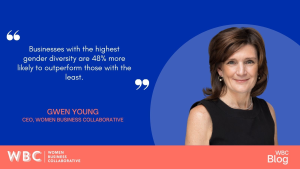
Deloitte research finds that companies with an inclusive culture are six times more likely to be innovative and twice as likely to meet or beat their financial targets, while businesses with the highest gender diversity are 48% more likely to outperform those with the least.
WBC awardee and collaborator General Motors CEO Mary Barra offers a vivid illustration. She began on the factory floor at 18, inspecting bumpers and hoods. Over years, she built a leadership style with inclusion at its core—hosting town halls, inviting input from across the organisation, and insisting that anyone who sees something wrong should speak up. That openness helped GM navigate a crippling early-tenure crisis, the recall of 30-million vehicles over a faulty ignition switch, without collapsing into bankruptcy. Barra has since pledged to make GM the most inclusive company in the world, on the conviction that employees who feel free to be themselves do their best work—an approach that has reshaped the company’s culture and helped it beat Wall Street’s profit expectations.
Mary Barra’s story demonstrates why WBC’s mission has never been more relevant.
For nearly a decade, we have brought together organizations that might otherwise never sit at the same table. We have connected corporate leaders with entrepreneurs. Investors with founders. Athletes with business executives. Veterans with employers. Researchers with practitioners. Policymakers with industry leaders.
The result is not simply conversation.The result is action.
Together, we are helping women entrepreneurs access capital through the Women’s Capital Summit. We are preparing professional athletes for leadership careers through the Athlete Business Academy. We are creating pathways for women veterans to bring their extraordinary leadership skills into business through Women Vets Lead.
These initiatives are different in focus, but they share a common purpose: building a stronger workforce and a stronger economy.
Because economic growth happens when talent is developed, opportunity is expanded, leaders invest in people, and organizations choose collaboration over competition.
The reality is that no single company can solve workforce challenges alone. No single nonprofit can create economic mobility on its own. No single government agency can prepare the workforce of the future without support from employers, educators, and community partners.
We need a new model.
We need radical collaboration.
Radical collaboration means looking beyond organizational boundaries and asking what is possible when we work together.
It means creating partnerships across industries, building bridges between the public and private sectors and investing in talent pipelines that reach athletes, veterans, entrepreneurs, and emerging leaders.
It also means recognizing that workforce development, economic growth, and business success are interconnected and understanding that when one group advances, we all benefit.
This is particularly important at a time when many institutions face uncertainty and many communities face division. The challenges before us are too large and too important to tackle alone.
The future workforce will require new skills, new perspectives, and new forms of leadership.The future economy will require innovation, resilience, and collaboration.
The future will belong to organizations that understand how to bring people together around a shared purpose.That is the movement WBC is building.
We envision a future where every woman has the opportunity to lead, contribute, and succeed. A future where businesses recognize that talent exists everywhere and opportunity should too. A future where collaboration drives innovation, inclusion drives growth, and leadership is defined by impact rather than barriers.
The question before us is simple:
If not now, when?
If not us, who?
Author
-
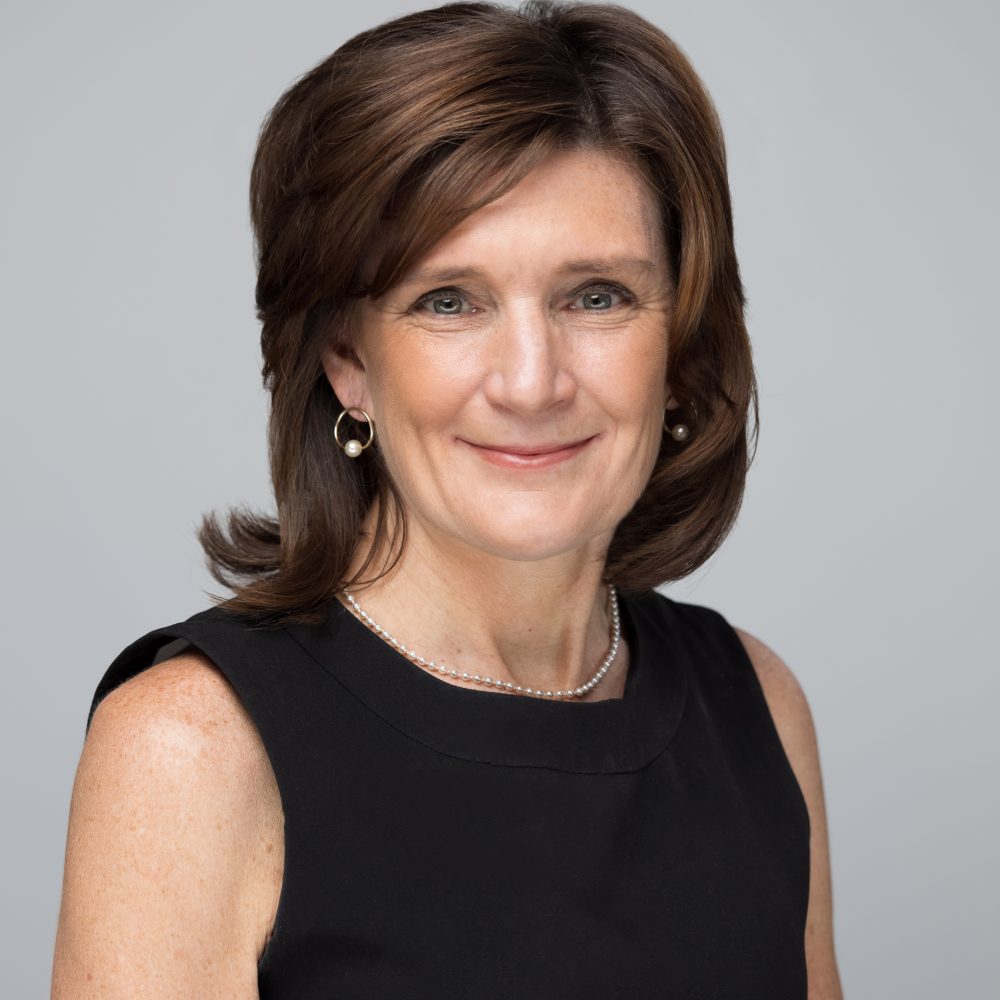
Gwen K. Young is the CEO of the Women Business Collaborative. She is also a Visiting Scholar at the Elliot School of International Affairs, George Washington University and former Director of the Global Women’s Leadership Initiative at the Wilson Center. She is an Advisor to Concordia. Ms. Young has worked across the globe to promote economic development, good governance and peace. She has developed strategy, programming and advocacy in the areas of humanitarian policy, international affairs and international development. This includes developing public private partnerships focused on public health, agriculture, gender equality, and access to finance. Further, Ms. Young has advocated for and published on international criminal law and designed SGBV guidelines. As an attorney, Ms. Young has worked as a professional advocate for women and human rights in corporate law settings, with the ICTY and the Kroc Institute for Peace and Justice at the University of San Diego. Her career has encompassed a comprehensive array of international organizations including the Bill & Melinda Gates Foundation, Medecins Sans Frontieres, International Rescue Committee, and the Harvard Institute for International Development. An alumna of Smith College, Harvard’s Kennedy School of Government and the University of California Davis, School of Law, Ms. Young has pursued a career of international public service focused on humanitarian relief, international development, and human rights starting with gender equality and equity.
View all posts